WhatsApp Marketing for Pakistani Businesses - The Untapped Channel

WhatsApp Marketing - Complete Guide

WhatsApp Marketing for Pakistani Businesses - The Untapped Channel

Pakistan has over 100 million WhatsApp users and ranks third globally for WhatsApp Business app downloads. Your customers are already on WhatsApp every single day. Yet most Pakistani businesses still use it only for informal customer service chats, completely ignoring its extraordinary potential as a structured marketing and sales channel. This guide shows you exactly how to change that.

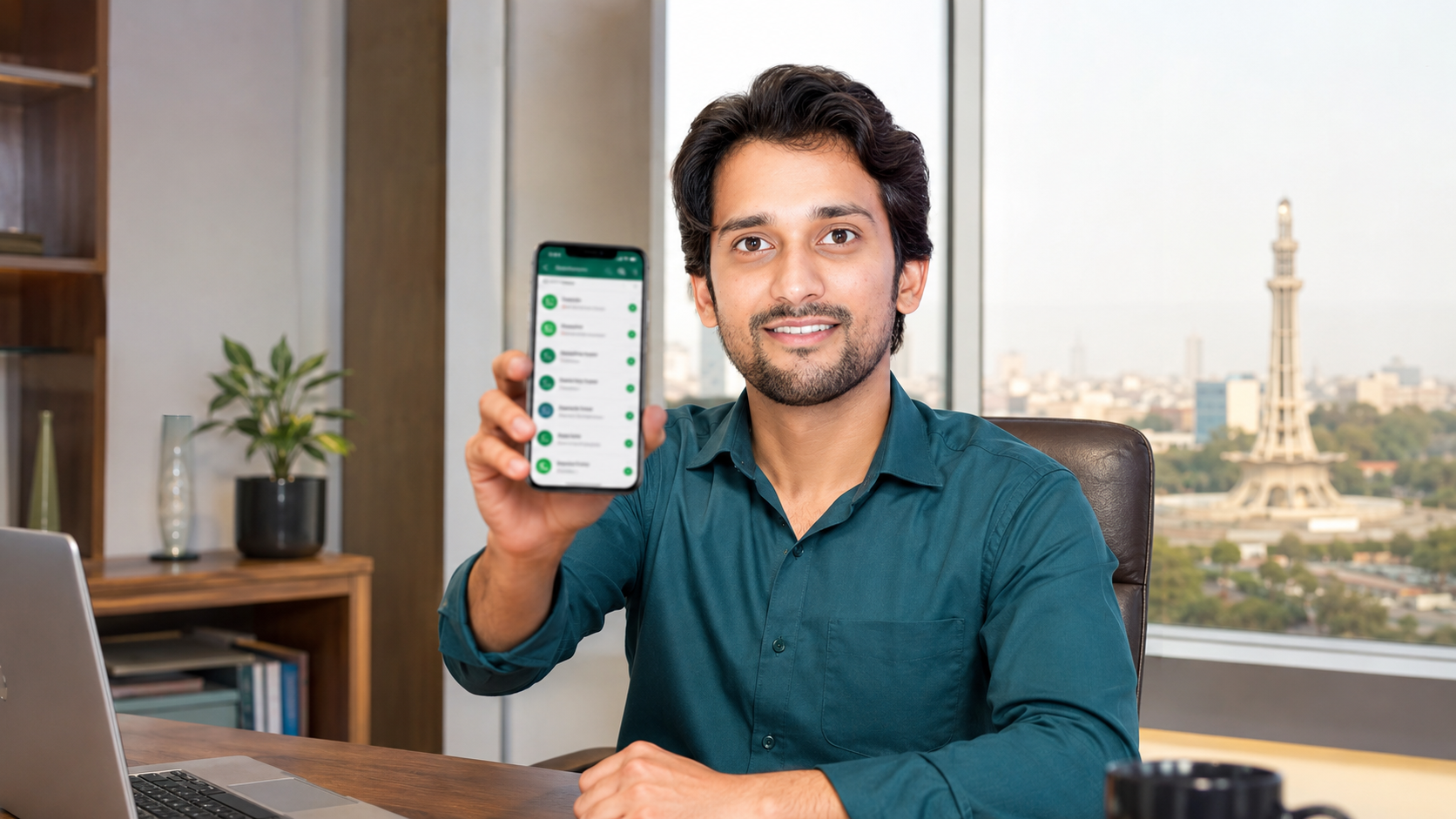
WhatsApp marketing guide for Pakistani businesses showing the untapped marketing channel
📊

1. WhatsApp in Pakistan - The Numbers That Demand Attention

Why Pakistan is one of the most important WhatsApp markets in the world.

Before discussing strategy, the scale of WhatsApp adoption in Pakistan deserves proper context. This is not a niche platform or an emerging technology. WhatsApp is the primary communication layer for Pakistani consumers, businesses, and institutions.

100M+

WhatsApp users in Pakistan according to WAB2C research, with 80+ million daily active users

3rd

Pakistan's global ranking for WhatsApp Business app downloads according to Q3 2025 data

80%

Of WhatsApp messages are read within 5 minutes of delivery according to Affinco marketing statistics

110M+

WhatsApp Business app downloads from Pakistan, third highest in the world after India and Indonesia

According to WAB2C's Pakistan WhatsApp statistics report, Pakistan has entered a mature digital phase where WhatsApp is no longer just a messaging app. It is the primary communication layer for consumers, businesses, and institutions across the country. From small shops in Lahore's Liberty Market to corporate offices in Karachi's financial district, WhatsApp is how Pakistan does business.

The Opportunity Gap: Despite this massive adoption, the vast majority of Pakistani businesses are using WhatsApp reactively, only responding to inbound customer messages. They have no structured strategy for using WhatsApp to proactively attract customers, nurture leads, broadcast promotions, or automate sales conversations. This gap represents one of the most accessible and affordable marketing opportunities available to Pakistani businesses right now.

💡

2. Why WhatsApp is Pakistan's Most Powerful Marketing Channel

The engagement metrics that make every other channel look weak by comparison.

Every marketing channel has a set of performance metrics that define how effectively it reaches and engages an audience. When you compare WhatsApp to email, SMS, Facebook, and Instagram on these core metrics, the difference is not marginal. It is enormous. Here is why WhatsApp marketing works so exceptionally well in Pakistan specifically:

98% Message Open Rate

WhatsApp messages achieve open rates of 95 to 98% according to multiple marketing research sources. Compare this to email marketing where the average open rate is 20 to 25%. When you send a WhatsApp message to your customer list, almost every single person reads it. No other marketing channel comes close to this level of guaranteed visibility.

45 to 60% Click-Through Rate

According to Affinco's WhatsApp marketing statistics, click-through rates on WhatsApp promotional content range from 45 to 60%. Email marketing averages 2 to 5% click-through rates. This means WhatsApp drives 10 to 30 times more traffic from the same size audience than email marketing.

28% Lead Conversion Rate Increase

Using WhatsApp chatbots for lead qualification and follow-up can increase lead conversion rates by 28% according to Market.biz WhatsApp statistics. For Pakistani businesses where sales often happen through conversations rather than checkout buttons, this is a particularly impactful metric.

Personal Feel at Scale

Pakistani consumers inherently trust WhatsApp messages more than Facebook ads or promotional emails because WhatsApp is where they communicate with family and friends. A business message arriving in WhatsApp feels personal and trustworthy in a way that an Instagram ad simply never can. This trust premium translates directly into higher response rates and faster purchase decisions.

⚖️

3. WhatsApp vs Email vs SMS - Which Wins for Pakistani Businesses?

A clear comparison of the three main direct marketing channels.

Factor WhatsApp Email SMS
Open Rate95 to 98%20 to 25%85 to 90%
Click-Through Rate45 to 60%2 to 5%5 to 10%
Response Rate40 to 50%5 to 10%10 to 15%
Rich Media SupportImages, video, catalogsImages, linksText only
Two-Way ConversationYes - natural chatDifficultLimited
Cost in PakistanNear zeroLowPKR 0.3 to 1 per SMS
Pakistan Adoption100M+ usersMediumHigh but declining

Verdict: WhatsApp wins on virtually every metric that matters for Pakistani businesses. The combination of near-universal adoption, extraordinary open rates, rich media support, and the ability to have genuine two-way conversations makes it the most powerful direct marketing channel available in Pakistan. The only reason more businesses are not using it strategically is lack of knowledge about how to do so properly.

⚙️

4. Setting Up WhatsApp Business the Right Way

The foundation that every Pakistani business must get right before marketing.

WhatsApp Business is a free app specifically designed for small and medium businesses. It includes features that the personal WhatsApp app does not have, including a business profile, catalog, automated messages, quick replies, and labels for organizing contacts. Setting it up properly is the essential first step before any marketing strategy.

Complete WhatsApp Business Profile Setup:

  • 1Business Name: Use your actual business name exactly as it appears everywhere else online. Consistency builds trust and helps with local search discovery.
  • 2Profile Photo: Use your business logo, not a personal photo. Customers need to immediately recognize they are contacting a business, not an individual.
  • 3Business Category: Select the most accurate category for your business. This helps WhatsApp recommend your business profile to relevant users in your area.
  • 4Business Description: Write a clear 2 to 3 sentence description that tells customers exactly what you offer, who you serve, and your key differentiator. Include your city name for local discoverability.
  • 5Address: Add your physical address if you have a shop or office. This enables map integration and builds credibility.
  • 6Business Hours: Set accurate hours. This tells customers when to expect a response and reduces frustration from unanswered messages outside business hours.
  • 7Website Link: Add your website URL to drive traffic from WhatsApp conversations to your website.

Essential Automated Messages to Set Up Immediately:

  • AGreeting Message: Sent automatically when a customer messages you for the first time. Example: "Assalam o Alaikum! Welcome to [Business Name]. How can we help you today? We typically respond within 30 minutes during business hours."
  • BAway Message: Sent when customers message outside business hours. Example: "Thank you for contacting [Business Name]. We are currently closed but will respond first thing tomorrow morning. Our business hours are 10am to 8pm, Monday to Saturday."
  • CQuick Replies: Pre-written responses to your most frequently asked questions. Save time and ensure consistent, professional answers to common queries about pricing, delivery, availability, and returns.
📢

5. WhatsApp Broadcast Strategy for Pakistani Businesses

How to reach your entire customer list with one message without it feeling like spam.

WhatsApp Broadcast allows you to send a single message to up to 256 contacts simultaneously, with each recipient receiving it as a personal individual message rather than a group message. This is one of the most powerful features for Pakistani business marketing because it combines the scale of mass messaging with the personal feel of individual conversation.

How to Use WhatsApp Broadcasts Effectively:

  • Segment your broadcast lists: Create separate broadcast lists for different customer types. Existing customers, new inquiries, VIP buyers, and city-specific contacts should all receive different, relevant messages tailored to their relationship with your business.
  • Broadcast frequency: For Pakistani audiences, 2 to 4 broadcasts per month is the sweet spot. More than weekly broadcasts risk customers muting or blocking your number, which permanently ends your ability to reach them via WhatsApp.
  • Always provide value first: Not every broadcast should be a promotion. Share useful tips, new arrivals, behind-the-scenes content, or exclusive information. A 70/30 value-to-promotion ratio maintains subscriber engagement.
  • Personalize with the first name: Even in a broadcast, using the customer's name in the opening line makes the message feel personal. "Assalam o Alaikum [Name]" versus a generic opening dramatically improves response rates.
  • Include a clear call to action: Every broadcast should end with one specific action you want the customer to take. "Reply YES to reserve yours" or "Click the link to shop the Eid collection" gives people something clear to do.

High-Converting Broadcast Templates for Pakistani Businesses:

Eid Sale Announcement:

"Assalam o Alaikum [Name]! Our Eid collection is now live. Flat 30% off on all embroidered suits. Limited pieces available. Reply NOW to reserve yours before they sell out. Shop here: [link]"

New Arrival Announcement:

"[Name], our summer lawn collection just arrived from Faisalabad. Over 40 new designs. Come visit us at [location] or order online at [link]. Free delivery across Pakistan on orders above PKR 2,000."

Flash Sale Urgency:

"[Name], 24 hours only. Use code EID30 for 30% off everything in store. Offer expires tonight at midnight. Shop now: [link]. Questions? Just reply to this message."

Important: Only send broadcasts to contacts who have saved your number and given consent to receive messages. Sending unsolicited broadcasts is spam, damages your brand reputation, and can result in your WhatsApp Business account being banned. Build your list properly - covered in Section 11.

👥

6. WhatsApp Groups as a Marketing Tool

How to build a community that markets your business for you.

WhatsApp Groups are one of the most uniquely powerful marketing tools for Pakistani businesses specifically because Pakistanis are culturally highly active in group communication. A well-managed WhatsApp group of loyal customers creates a self-sustaining community that generates word-of-mouth marketing, provides genuine product feedback, and builds the kind of brand loyalty that no paid advertisement can buy.

Types of Groups That Work for Pakistani Businesses:

  • VIP Customer Group: An exclusive group for your top buyers. Share early access to new products, exclusive discounts, and special offers. The exclusivity itself is a retention tool. Customers who feel VIP status buy more frequently.
  • Product Update Group: Customers opt in to receive updates about new arrivals, restocks, and product news. Works particularly well for fashion, electronics, and food businesses in Pakistan where product variety drives repeat visits.
  • Community Group: A group centered around a topic your customers care about, not just your products. A kitchen appliance store might run a "Pakistani Home Cooking Tips" group. This builds much deeper loyalty than a purely promotional group.
  • City-Specific Groups: For businesses serving multiple Pakistani cities, separate groups for Karachi, Lahore, and Islamabad customers allow you to share location-relevant offers, delivery updates, and city-specific promotions.

Group Management Best Practices:

  • Set clear group rules in the description so members know what the group is for
  • Post consistently but not excessively - 3 to 5 posts per week maintains engagement without causing fatigue
  • Use the Admin Only posting setting for announcement groups to prevent spam from members
  • Actively respond to member questions to show the group is actively managed
  • Remove inactive members periodically to maintain a healthy engagement ratio

Pakistan Insight: Pakistani customers who are in a business's WhatsApp group have a dramatically higher lifetime value than those who are not. The combination of regular touchpoints, community feeling, and exclusive offers creates a level of brand loyalty that is very difficult to replicate through any other channel.

🛍️

7. WhatsApp Catalog for eCommerce and Retail

Turn your WhatsApp Business account into a complete product storefront.

WhatsApp Catalog is a feature within WhatsApp Business that allows you to create a digital product catalog directly inside the app. Customers can browse your products, view prices, and send you orders all without ever leaving WhatsApp. For Pakistani retail and eCommerce businesses this is an extraordinarily powerful feature that most are not using at all.

How to Set Up WhatsApp Catalog:

  • Open WhatsApp Business and go to Settings, then Business Tools, then Catalog
  • Add product photos, names, prices, descriptions, and product codes for each item
  • Organize products into collections for easy browsing
  • Share individual catalog items or the full catalog link in conversations, groups, and broadcasts
  • Update catalog prices and availability regularly especially during sales and Eid seasons

Why Catalog Works So Well for Pakistani Sellers:

  • Most Pakistani customers prefer browsing and ordering via WhatsApp over visiting websites
  • Catalog removes the friction of sharing individual product images one by one in conversations
  • Customers can share catalog items with family members to get opinions before buying, creating organic word-of-mouth
  • Works perfectly for businesses without their own website
  • Particularly powerful for home-based businesses selling clothing, food, and handicrafts across Pakistan

Real Example: A home-based abaya business in Karachi's North Nazimabad area added all 45 of her designs to WhatsApp Catalog with prices and fabric details. Instead of sharing 45 individual photos with every new customer, she now sends one catalog link. Order inquiries increased by 60% within the first month because customers could browse at their own pace and share items with friends directly from the catalog.

🤖

8. WhatsApp Automation and Chatbots

Handle hundreds of customer conversations simultaneously without hiring more staff.

As your WhatsApp marketing scales, manually responding to every message becomes impossible. WhatsApp automation tools allow you to create intelligent chatbot flows that handle routine inquiries automatically, qualify leads, take orders, and escalate complex queries to a human agent, all without the customer experiencing any meaningful delay.

WhatsApp Chatbot Flow Ideas for Pakistani Businesses:

Order Status Flow

Customer sends "ORDER STATUS" - Bot asks for order number - Bot provides delivery status automatically. Eliminates the most common inbound query for Pakistani eCommerce businesses.

Product Inquiry Flow

Customer asks about a product - Bot presents a menu of product categories - Customer selects category - Bot shares catalog link for that category with pricing. Handles product browsing 24/7 without staff.

Lead Qualification Flow

New contact messages - Bot asks qualifying questions (city, budget, requirement) - Hot leads are tagged and escalated to a sales person - Cold leads receive relevant content automatically.

Appointment Booking Flow

Ideal for clinics, salons, and service businesses. Customer requests appointment - Bot presents available time slots - Customer confirms - Bot sends confirmation and reminder. Completely automated booking without a receptionist.

🔌

9. WhatsApp Business API - When You Need It

The enterprise-level solution for scaling WhatsApp marketing beyond the free app's limits.

The free WhatsApp Business app has a significant limitation: broadcasts are capped at 256 contacts, and you cannot send first messages to new contacts who have not saved your number. The WhatsApp Business API removes these limitations entirely and unlocks enterprise-level marketing capabilities.

WhatsApp Business App (Free)

  • - Broadcasts limited to 256 contacts
  • - Basic automation only
  • - Single device use
  • - No CRM integration
  • - Catalog feature included
  • - Best for: Small businesses under 500 contacts

WhatsApp Business API (Paid)

  • - Unlimited broadcast reach
  • - Advanced chatbot automation
  • - Multiple agent access
  • - CRM and eCommerce integration
  • - Analytics and reporting
  • - Best for: Growing businesses with 500+ contacts

Pakistan API Providers: Several companies provide WhatsApp Business API access for Pakistani businesses including WAB2C, Twilio, and various local resellers. Pricing typically starts around $50 to $100 USD per month depending on message volume. For businesses sending thousands of marketing messages monthly, the ROI is significant. For most small Pakistani businesses just starting WhatsApp marketing, the free app is sufficient to start.

📝

10. What to Send - WhatsApp Content Strategy

The content mix that keeps subscribers engaged and converts them into buyers.

The biggest mistake Pakistani businesses make with WhatsApp marketing is sending only promotional messages. This quickly trains customers to ignore or block your number. A sustainable WhatsApp content strategy mixes value-first content with promotions in a ratio that keeps customers genuinely glad they are in your list.

The Recommended Content Mix:

40%

Value Content

Tips, how-to guides, useful information relevant to your niche

30%

Engagement Content

Questions, polls, behind-the-scenes, customer stories

30%

Promotional Content

New arrivals, sales, special offers, product highlights

High-Performing Content Ideas by Business Type:

Fashion and Clothing Businesses

Styling tips, fabric care guides, outfit combination ideas, Eid lookbook previews, stain removal tips, new arrival first-look videos

Restaurants and Food Businesses

Daily specials, recipe tips, behind-the-scenes kitchen videos, Ramadan Iftar menus, customer food photos, seasonal menu announcements

Service Businesses (Clinics, Salons, Agencies)

Expert tips relevant to your service, before-and-after results, client testimonials, seasonal packages, appointment reminders, health or beauty advice

eCommerce and Online Stores

Product unboxing videos, buying guides, customer review highlights, flash sale alerts, new arrival first access, bundle deal announcements

📋

11. How to Build Your WhatsApp Contact List Legally and Ethically

Growing a high-quality list that actually wants to hear from you.

The quality of your WhatsApp marketing list is far more important than its size. A list of 200 customers who genuinely want your updates will outperform a purchased list of 2,000 random numbers every time. More importantly, building your list through consent-based methods protects your account from being banned by WhatsApp for spam.

Legitimate Ways to Build Your WhatsApp List in Pakistan:

  • Website WhatsApp Button: Add a WhatsApp click-to-chat button on your website. Visitors who click it have already shown purchase intent. This is one of the highest quality sources of WhatsApp contacts.
  • In-Store Sign-Up: Display a QR code at your shop counter that links to your WhatsApp with a pre-filled "Add me to your updates list" message. Customers who scan it have actively opted in.
  • Purchase Follow-Up: After every sale, send the customer a WhatsApp message and ask if they want to join your exclusive updates list for early access to new arrivals and special offers.
  • Social Media Bio Link: Add your WhatsApp click-to-chat link in your Instagram bio, Facebook page, and TikTok bio. Your existing social media followers are warm leads who already like your brand.
  • Lead Magnet: Offer something valuable for free in exchange for joining your WhatsApp list. A fashion store might offer a "Free Eid Styling Guide PDF" to customers who save their WhatsApp number and message a keyword.
  • Facebook Click-to-WhatsApp Ads: Run Facebook or Instagram ads where the call to action is a WhatsApp message rather than a website visit. These deliver highly qualified leads directly into your WhatsApp inbox.

Never Do This: Do not buy or scrape WhatsApp number lists. Do not add numbers to broadcast lists without their consent. Do not add people to WhatsApp groups without asking first. These practices violate WhatsApp's terms of service, can result in permanent account bans, and damage your brand reputation in Pakistan's word-of-mouth-driven market.

💰

12. Using WhatsApp to Close Sales

The conversational sales approach that works uniquely well in Pakistan.

Pakistani consumers are relationship-driven buyers. They prefer to ask questions, get reassurance, and feel a personal connection before making a purchase decision. This cultural preference makes WhatsApp the ideal sales channel because it naturally enables the kind of conversational selling that converts Pakistani buyers better than any checkout button.

The WhatsApp Sales Conversation Framework:

  • 1Respond fast: Speed of response is the single most important factor in WhatsApp sales conversion. A customer who asks about a product and receives no reply within 30 minutes will find another seller. Target a maximum 15-minute response time during business hours.
  • 2Understand before selling: Ask one or two qualifying questions before presenting products. "Are you looking for something for everyday wear or a special occasion?" shows you care about finding the right solution, not just making a sale.
  • 3Use voice notes strategically: A 30-second voice note from the business owner explaining a product creates an extraordinary personal connection that text alone cannot achieve. Pakistani customers respond very positively to the warmth of a voice message.
  • 4Share social proof proactively: When a customer shows interest, share 2 to 3 recent customer photos or testimonials. Pakistani buyers trust peer recommendations above all other forms of social proof.
  • 5Create a gentle close: "Should I reserve this for you?" or "Shall I confirm your order?" is a soft but effective close that works well with Pakistani buyers who may hesitate to initiate the purchase themselves.
  • 6Follow up once: If a customer stops responding after showing interest, send one follow-up message 24 hours later. "Assalam o Alaikum [Name], just checking if you had any more questions about the product you asked about yesterday?" This recovers a significant number of lost sales.
⚠️

13. WhatsApp Marketing Mistakes That Damage Your Business

Common errors that Pakistani businesses make and exactly how to avoid them.

  • Broadcasting to unconsented numbers: This is the most damaging mistake. When multiple people report your number as spam, WhatsApp bans your account permanently. Rebuilding a WhatsApp business presence from a new number means starting entirely from scratch.
  • Sending messages at inappropriate times: Sending promotional messages late at night or very early morning is deeply annoying to Pakistani customers. Stick to 9am to 9pm for all broadcast messages regardless of urgency.
  • Overloading customers with messages: More than 4 to 5 messages per week per customer is too much. Pakistani customers who feel spammed will block your number and tell others to do the same.
  • Using only text with no visuals: WhatsApp supports images, videos, GIFs, and documents. Text-only messages consistently underperform compared to messages with relevant visual content. Always include a product image or short video with promotional messages.
  • Ignoring customer replies to broadcasts: When customers respond to a broadcast, they expect a personal reply. Ignoring or delaying these responses destroys the personal trust that makes WhatsApp marketing so effective.
  • No clear opt-out option: Always tell customers they can reply STOP to be removed from your broadcast list. Giving customers control paradoxically increases trust and reduces the likelihood they will block your number.
  • Using personal WhatsApp for business: Mixing personal and business communication on the same number is unprofessional and limits you to personal WhatsApp's features. Always use a dedicated number for WhatsApp Business.
🛠️

14. Best WhatsApp Marketing Tools for Pakistani Businesses

Free and affordable tools to scale your WhatsApp marketing.

WhatsApp Business App (Free)

The starting point for every Pakistani business. Free, easy to set up, includes catalog, automated messages, quick replies, and broadcast to 256 contacts. More than sufficient for businesses just starting WhatsApp marketing. Available on iOS and Android.

Best for: All small businesses starting out

ManyChat (Free plan available)

Excellent chatbot automation platform that integrates with WhatsApp. Build automated conversation flows, lead qualification sequences, and order management bots without coding. Free plan available with basic features.

Best for: eCommerce businesses and service companies needing automation

WAB2C (Pakistan-based)

A Pakistani WhatsApp Business API platform specifically built for local businesses. Offers a 3-month free trial, Urdu language support, and local payment options making it particularly accessible for Pakistani businesses ready to scale beyond the free app's limitations.

Best for: Growing Pakistani businesses needing API access with local support

Canva (Free plan)

Not specifically a WhatsApp tool but essential for creating professional images and short videos for WhatsApp broadcasts and group posts. WhatsApp messages with well-designed visuals consistently outperform text-only messages in Pakistani markets.

Best for: Creating visual content for all WhatsApp marketing

ChatGPT (Free plan)

Use ChatGPT to write all your WhatsApp broadcast messages, chatbot response scripts, and quick reply templates. A well-written WhatsApp message takes 30 seconds with ChatGPT versus 15 minutes manually. Particularly useful for writing Eid, Ramadan, and seasonal campaign messages in both English and Urdu.

Best for: Writing all WhatsApp marketing copy quickly

15. Frequently Asked Questions

Common questions from Pakistani business owners about WhatsApp marketing.

Q: Is WhatsApp Marketing legal in Pakistan?

Yes, WhatsApp marketing is legal in Pakistan when done correctly. The key requirement is consent. You must only market to contacts who have opted in to receive your messages. Unsolicited mass messaging violates both WhatsApp's Terms of Service and Pakistan's emerging digital privacy regulations. Consent-based WhatsApp marketing is completely legitimate and widely practiced by Pakistani businesses of all sizes.

Q: Can I use WhatsApp to replace my website for selling products?

For many Pakistani home-based businesses and small retailers, WhatsApp Catalog combined with WhatsApp Business effectively functions as a complete sales channel without needing a dedicated website. However, having a website alongside WhatsApp gives you significantly more visibility through Google search and AI-powered discovery. The ideal setup is a simple website that drives traffic to WhatsApp for the actual sales conversation.

Q: How many contacts do I need before WhatsApp marketing is worth starting?

Start with whatever contacts you have right now, even if it is just 20 to 30 loyal customers. WhatsApp marketing compounds over time as your list grows organically through purchases, referrals, and opt-ins. Starting with a small high-quality list and learning what content resonates is far more valuable than waiting until you have hundreds of contacts.

Q: Should I use the same number for WhatsApp Business that I use personally?

No. Use a dedicated phone number for WhatsApp Business. Mixing personal and business use on the same number creates confusion for customers, limits your professional boundaries, and prevents you from properly managing business communications. A simple new SIM card costs very little and creates a clean separation between personal and professional WhatsApp use.

Q: How is WhatsApp marketing different from WhatsApp spam?

The difference is entirely about consent and value. Spam is sending unsolicited messages to people who have not asked to receive them. WhatsApp marketing is sending relevant, valuable messages to people who have explicitly opted in to your list because they want updates from your business. Spam damages your brand and risks account bans. Consent-based WhatsApp marketing builds customer relationships and drives genuine sales growth.

📚

Sources and Further Reading

Data and research referenced in this guide.

🏁

Conclusion

Pakistan has 100 million WhatsApp users. Messages get opened 98% of the time. Click-through rates are 10 to 30 times higher than email. Your customers are already on WhatsApp every single day. The channel is free. The opportunity is extraordinary.

Yet most Pakistani businesses are using WhatsApp only as a reactive customer service tool, completely missing its potential as a proactive marketing and sales channel. The businesses that are using it strategically, with structured broadcast lists, engaging group communities, properly optimized catalogs, and intelligent automation, are building direct customer relationships that no algorithm change, ad price increase, or platform policy update can take away from them.

Start today with what you have. Set up WhatsApp Business properly. Create your first broadcast list from your existing customers. Add your products to the catalog. Set up a greeting message and away message. Build from there consistently. The Pakistani businesses that build strong WhatsApp marketing channels now are building a competitive moat that will be very difficult for slower-moving competitors to overcome later.

Found this guide helpful? Share it with a Pakistani business owner who is still only using WhatsApp for customer service. And explore more digital marketing, AI tools, and eCommerce strategy guides at Digitalboxes.net.

How LinkedIn and Meta Algorithms Work - The Content Strategy Your Business Needs

Social Media Strategy - Complete Guide

How LinkedIn and Meta Algorithms Work - The Content Strategy Your Business Needs

You can spend hours crafting the perfect post and watch it reach twenty people. Or you can post something average and watch it reach twenty thousand. The difference is rarely the content quality. It is whether you understand how each platform's algorithm makes its distribution decisions. This guide breaks down exactly how the LinkedIn and Meta algorithms work, what signals they reward, and most importantly, which platform your business should actually be on.

How LinkedIn and Meta algorithms work - content strategy guide for businesses
⚠️

1. Read This First - Not Every Platform is Right for Every Business

The most important section in this entire guide.

Before explaining how these algorithms work, there is something critically important that most social media guides never say clearly enough: LinkedIn and Meta are fundamentally different platforms designed for completely different purposes and audiences. Using the wrong platform for your business is not just ineffective, it actively wastes your time, money, and energy.

LinkedIn is Built For

  • - Professional services and consulting
  • - B2B products and SaaS companies
  • - Recruitment and HR services
  • - Freelancers targeting corporate clients
  • - Thought leadership and expertise
  • - High-ticket services and enterprise sales
  • - Career development and education

Meta is Built For

  • - B2C products and retail businesses
  • - Restaurants, cafes, and food businesses
  • - Fashion, beauty, and lifestyle brands
  • - Local services and community businesses
  • - Entertainment and creative content
  • - E-commerce and online shops
  • - Events and entertainment

Real Example of Getting This Wrong

A software development company in Karachi was posting daily on Instagram for 6 months and getting hundreds of likes from students and general public but zero client inquiries. When they switched their energy to LinkedIn and published weekly thought leadership posts about software solutions for Pakistani businesses, they landed 3 corporate clients within 2 months. Same effort, completely different results because they matched the platform to their audience.

Conversely, a clothing boutique in Lahore was posting professional LinkedIn articles about fashion trends and wondering why nobody was buying. Their customers are on Instagram and Facebook, not LinkedIn. When they shifted to daily Instagram Reels and Facebook posts, their online sales increased significantly within weeks.

The Rule: Before investing in any platform, ask yourself one question. Where does my target customer actually spend time online? That answer should determine your platform choice, not where your competitors are posting or where it is easiest to create content.

LI

2. How the LinkedIn Algorithm Works

What LinkedIn is trying to do and why it matters for your content.

LinkedIn's core mission is to connect professionals and help them develop their careers and businesses. Its algorithm is designed around one primary goal: showing each user the most relevant, professionally valuable content for their specific network, interests, and career stage. This is fundamentally different from Meta, which optimizes primarily for entertainment and time on platform.

LinkedIn uses a unified AI-powered system that converts posts and user profiles into mathematical representations, then matches them based on semantic relevance. In simple terms, LinkedIn reads your post, understands what it is actually about, and then finds the professional profiles most likely to find it useful. This is why LinkedIn content reaches people who are not yet following you far more reliably than most platforms. According to LinkedIn's official Feed Ranking guidance, the Feed is personalized by AI systems that consider the context of a post, signals from your profile, network, and activity.

The Big Shift in Recent Updates: According to Sprout Social's updated LinkedIn algorithm guide, LinkedIn's algorithm shifted from rewarding viral reach to what it now calls "Depth and Authority." Educational content that generates genuine professional discussion now gets 3 to 5 times more reach than other post types. The platform is actively downranking content that looks engineered or promotional and rewarding content that feels genuinely helpful to a professional audience.

🔄

3. LinkedIn's 3-Stage Distribution System

Every post you publish goes through these three stages before reaching a wide audience.

Understanding these three stages is the most practical thing you can learn about the LinkedIn algorithm. Every single post you publish goes through this exact process, and knowing what happens at each stage tells you exactly what you need to optimize.

1

Stage 1 - Automated Quality Filter (Instant)

The moment you publish, LinkedIn's AI immediately scans your post and categorizes it as spam, low quality, or pass. Posts that look like spam get suppressed before any human ever sees them. Common triggers that automatically fail this filter include excessive hashtags (more than 3 to 5), repetitive promotional language, content that copies another post, engagement bait phrases like "Comment YES if you agree," and posts with external links placed prominently at the top. According to Hootsuite's LinkedIn algorithm breakdown, this automated quality filter is the most common reason posts fail to reach even a fraction of a creator's existing network.

Your post is judged in seconds. If it fails here, almost nobody will ever see it regardless of its actual quality.

2

Stage 2 - Initial Engagement Test (First 60 Minutes)

If your post passes the quality filter, LinkedIn shows it to a small sample of your most engaged connections, typically 2 to 5% of your network. This first 60-minute window is what many LinkedIn experts call the "golden hour." During this period the algorithm measures very specific engagement signals to decide whether your post deserves wider distribution. According to Social Insider's LinkedIn research, comments are weighted 15 times more heavily than likes. Dwell time, how long people actually spend reading your post, is measured and weighted heavily. Profile clicks after reading your post are also tracked as a quality signal.

Respond to every comment within the first 2 hours. Data shows this generates 30% more engagement across the post's full lifecycle.

3

Stage 3 - Extended Distribution (48 to 72 Hours)

Posts that generate strong signals in the first hour get pushed to a much wider audience including second-degree connections and users with similar professional interests who do not follow you at all. This extended distribution phase can continue for 48 to 72 hours if engagement remains strong. Unlike Instagram or Facebook where content dies within hours, a strong LinkedIn post can keep gaining reach for days. Posts can stay in extended distribution for days or even weeks if they continue generating genuine engagement.

This is why LinkedIn posts have a much longer effective lifespan than Meta content. One great LinkedIn post can deliver value for an entire week.

📡

4. LinkedIn Ranking Signals That Matter Most

What the algorithm is measuring and how to optimize for each signal.

LinkedIn measures dozens of signals when ranking your content but these are the ones that carry the most weight based on current platform behavior and official LinkedIn guidance:

💬

Comments (Most Powerful Signal)

Comments carry 15 times more algorithmic weight than likes. Meaningful comments from users with strong professional profiles in your niche carry even more weight. A post that ends with a genuine question consistently outperforms one that does not. Always reply to comments quickly to extend the conversation thread.

⏱️

Dwell Time (The Silent Signal)

LinkedIn measures how long users spend on your content before scrolling. According to Neil Patel's LinkedIn algorithm analysis, long-form posts and document carousels generate more dwell time than short text posts. The algorithm interprets dwell time as evidence of genuine value. You cannot buy dwell time. The only way to earn it is by writing content people actually want to read fully.

🔗

Profile Clicks After Reading

When someone reads your post and then clicks on your profile, LinkedIn interprets this as a strong signal that you are a credible and interesting professional worth following. A complete, optimized LinkedIn profile is essential for converting post readers into followers and connections.

🎯

Creator Authority and Consistency

LinkedIn rewards consistent creators in specific topic areas. The algorithm develops what it calls "topic authority" for your profile based on what you consistently post about. Posting regularly about one specific professional topic builds much more reach over time than posting randomly about many different subjects.

🚫

Negative Signals (What Kills Reach)

The algorithm actively tracks "hide this post" actions, "I do not want to see this" clicks, and rapid scrolling past your content without pausing. A high rate of these negative signals tells LinkedIn your content is not relevant and suppresses future distribution significantly.

✍️

5. Content Types That Win on LinkedIn

The formats and topics the LinkedIn algorithm rewards most right now.

LinkedIn's algorithm has developed a clear preference for certain content formats and topic types. According to LinkedIn's official Marketing Blog, analysis of over 10,000 LinkedIn posts shows that educational content gets 3 to 5 times more reach than other post types. Here is what consistently performs best:

Top Performing Formats

  • Document carousels (PDF slides)
  • Long-form text posts with story hooks
  • Native videos (uploaded directly)
  • Polls on professional topics
  • LinkedIn newsletters
  • Case studies with real numbers

Formats That Get Penalized

  • External links in the post body
  • Reposting other people's content
  • Generic motivational quotes
  • Company promotional announcements
  • Cross-posted content from Instagram
  • Posts with more than 5 hashtags

Best LinkedIn Content Topics for Pakistani Businesses

  • Lessons learned from a specific client project or business challenge
  • Behind-the-scenes of your professional process or methodology
  • Data and insights about your industry in Pakistan
  • Honest takes on controversial professional topics in your niche
  • Step-by-step breakdowns of a skill or process you have mastered
  • Career and business stories with a clear narrative arc
ME

6. How the Meta Algorithm Works - The Big Picture

Understanding Meta's unified approach across Facebook and Instagram.

Meta operates two major social platforms: Facebook and Instagram. While they share the same parent company and some underlying technology, they function as very different products with different user behaviors, demographics, and content preferences. Understanding both individually is essential.

What both platforms share is Meta's overarching algorithmic philosophy: optimize for time on platform and meaningful interactions. Meta's algorithm is fundamentally trying to keep users scrolling longer by showing them content that triggers emotional responses, sparks conversations, and makes them feel connected to their community. This is a very different goal from LinkedIn's professional relevance focus.

The Major Shift Across Both Platforms: According to Meta's official transparency documentation, both Facebook and Instagram have moved from a "follow graph" to an "interest graph" model. Previously, your followers were almost guaranteed to see your posts. Today your followers no longer guarantee reach. Content itself has to earn distribution through engagement velocity, watch time, and content-signal matching. This means your reach now depends on content quality and relevance, not just how many followers you have accumulated.

FB

7. Facebook Algorithm Deep Dive

How Facebook decides which posts to show, to whom, and when.

Facebook's algorithm in its current form prioritizes what Meta calls "meaningful interactions," content that sparks real conversations rather than passive scrolling. According to Meta's official Facebook Business Help Center, the algorithm processes thousands of signals for every post, combining data about the content itself, the account posting it, and the individual user's past behavior to calculate a relevance score that determines visibility.

How Facebook Processes Your Post

When you publish a post on Facebook, the algorithm first pulls together candidate content from your friends, pages you follow, groups you are in, and recommended content based on your interests. It then scores each piece of content against your specific profile using behavioral data about what you have engaged with recently. Content that scores above a threshold appears in your feed in order of its relevance score.

Facebook's Key Ranking Signals

  • Predicted Engagement: Facebook predicts whether a specific user is likely to comment, share, or react based on their past behavior. Content with high predicted engagement gets more distribution before it has even received any actual engagement.
  • Engagement Velocity: How quickly a post receives engagement in the first hour after posting. Fast early engagement signals that content is resonating and triggers wider distribution.
  • Comment Depth: Posts that generate back-and-forth conversation threads, where people reply to each other's comments, receive dramatically more algorithmic amplification than posts with single-level comments.
  • Video Watch Time: Video content that people watch past 60% completion is heavily rewarded. Facebook Reels with strong watch-through rates consistently reach far beyond the poster's existing audience.
  • Shares Over Likes: A share indicates the content was valuable enough to spread to someone's own network, which is a much stronger quality signal than a passive like. Posts with high share rates consistently reach the widest audiences.
  • Groups Engagement: Facebook has doubled down on Groups. Content that generates strong engagement within relevant Groups often gets amplified significantly beyond the group itself.

Pakistan-Specific Insight: Facebook Groups are particularly powerful in Pakistan. Pakistani audiences are highly active in niche Facebook groups around topics like real estate, fashion, food, business, and local communities. For Pakistani businesses, active participation and content sharing in relevant Facebook Groups often delivers more reach and engagement than posting on a business Page alone.

IG

8. Instagram Algorithm Deep Dive

Instagram is not one algorithm but multiple separate systems working together.

Instagram uses multiple different algorithms rather than a single ranking system. According to Instagram's official Creator documentation, the Feed, Reels, Stories, and Explore sections each have their own separate ranking signals and optimization targets. Understanding which surface you are optimizing for changes what you should do with your content.

Instagram Feed Algorithm

When you open Instagram, the algorithm pulls roughly 500 recent posts from accounts you follow and filters out anything violating guidelines. It then scores each post based on predicted engagement, factoring in your past interactions with the author, the post format, and how other users have responded. The most important signals are relationship strength with the creator, your past interaction history, content recency, and how long you spend looking at the post before scrolling.

Instagram Reels Algorithm

Reels have the highest reach potential of any Instagram content type. The Reels algorithm prioritizes watch-through rate above almost everything else. A Reel that people watch to completion and then rewatch gets pushed to massive audiences beyond your existing followers. Shares via DM are also an extremely strong Reels ranking signal. Reels that people send to friends are interpreted as highly valuable content and receive aggressive distribution.

Instagram Explore Algorithm

Explore shows content to users who do not follow you but whose interest graph matches your content. This is one of the most powerful discovery mechanisms on any social platform. To appear in Explore, your content needs strong engagement signals from your existing audience first. High save rates are particularly important for Explore distribution as saves indicate content valuable enough to return to.

Important Instagram Update: According to Hootsuite's Instagram algorithm research, Instagram's AI now analyzes not just captions and hashtags but also the visuals, on-screen text, voiceover audio, and video clips in your content to understand what it is actually about. Keyword-stuffed captions with no visual relevance no longer work. The content itself must match the topic you claim to be posting about. Authenticity signals are increasingly rewarded while purely AI-generated content with no personal human layer is increasingly deprioritized.

🎬

9. Content That Wins on Meta Platforms

What the Facebook and Instagram algorithms reward right now.

Despite their differences, Facebook and Instagram share common content preferences driven by their shared parent company's algorithmic goals. Here is what consistently performs best across Meta's platforms:

Top Performing on Meta

  • Short video Reels under 60 seconds
  • Carousel posts (multiple images)
  • Behind-the-scenes content
  • User-generated content and reposts
  • Interactive Stories with polls and questions
  • Community-focused content
  • Original content with trending audio

What Gets Penalized on Meta

  • Reposted content with visible watermarks
  • Pure AI-generated content with no human layer
  • Posts asking for likes, comments, or shares
  • Misleading clickbait headlines
  • Overly promotional content with no value
  • Cross-posted content from other platforms
⚖️

10. LinkedIn vs Meta - Key Differences at a Glance

Understanding where these platforms fundamentally diverge.

Factor LinkedIn Meta (FB + IG)
Primary GoalProfessional developmentEntertainment and connection
Best AudienceB2B, professionals, corporateB2C, consumers, general public
Top SignalComments and dwell timeShares and watch time
Content Lifespan2 to 7 days2 to 48 hours
Best FormatText posts and carouselsShort video Reels
Posting Frequency3 to 5 times per weekDaily or more
Link HandlingPenalizes links in post bodyLinks perform reasonably well
Pakistani User BaseProfessionals and businessesMass market consumers
🎯

11. Which Platform is Right for Your Business?

A clear framework to help Pakistani businesses make the right choice.

Rather than telling every business to be on every platform, here is an honest guide to which platform makes the most sense based on your specific business type. Being excellent on one platform almost always outperforms being mediocre on three.

Choose LinkedIn if your business is:

  • A digital marketing, SEO, or web development agency
  • A software house or IT solutions company
  • A recruitment, HR, or staffing service
  • A freelancer targeting corporate or international clients
  • A business consultant, coach, or trainer
  • A financial services, accounting, or legal firm
  • A B2B product or SaaS company

Choose Meta (Facebook and Instagram) if your business is:

  • A restaurant, cafe, or food business
  • A fashion, clothing, or accessories brand
  • A beauty salon, spa, or wellness service
  • A local retail shop or e-commerce store
  • An events company or entertainment business
  • A real estate agency selling to consumers
  • A school, tuition center, or consumer education service

Consider Both if your business is:

  • A digital marketing agency that serves both businesses and consumers
  • A personal brand building both professional authority and consumer following
  • An e-commerce business also targeting corporate bulk buyers
  • An educational institution targeting both students and corporate training clients
📋

12. Building Your Content Strategy

A practical framework for consistent content that works with both algorithms.

Knowing how algorithms work is only useful if you translate it into a consistent, executable content strategy. Here is a practical framework for each platform:

LinkedIn Content Strategy Framework

  • 1Post frequency: 3 to 5 times per week. Consistency matters more than volume on LinkedIn.
  • 2Content mix: 60% educational insights, 25% personal professional stories, 15% industry opinions.
  • 3Hook strategy: Start every post with a single compelling first line that stops the scroll. No introductions, no preamble. Lead with the most interesting thing.
  • 4End with a question: Every post should end with a genuine question that invites professional discussion. This triggers the comment signal that drives distribution.
  • 5Links strategy: Never put links in the post body. Add them in the first comment instead and mention "link in comments" at the end of your post.
  • 6Engagement window: Reply to every comment within the first 2 hours of posting. This is critical for triggering extended distribution.

Meta Content Strategy Framework

  • 1Post frequency: Daily on Instagram Reels, 4 to 5 times per week on Facebook. Consistency is more important than frequency.
  • 2Video first: Reels and short videos should be your primary content type. They receive the most algorithmic amplification of any format on both platforms.
  • 3Hook in 3 seconds: The first 3 seconds of any video determine whether people watch further. Lead with your most visually compelling moment or most provocative statement.
  • 4Caption with keywords: Instagram now reads captions for topic understanding. Write captions with relevant keywords naturally included, not just hashtags.
  • 5Stories daily: Post to Instagram Stories every day even on days you do not post a feed post. Stories maintain your relationship with existing followers and keep your account active in the algorithm.
  • 6Encourage saves and shares: Create content people want to save for later or share with friends. These are the highest-value engagement signals on Meta platforms.
⚠️

13. Common Mistakes That Kill Your Reach on Both Platforms

Avoid these and your content will immediately perform better.

  • Being on the wrong platform for your audience: This is the single biggest mistake. A B2B software company spending all their energy on Instagram instead of LinkedIn is doing the social media equivalent of advertising in the wrong city. Match your platform to where your actual customers spend time.
  • Cross-posting the same content to both platforms: LinkedIn and Meta audiences have completely different expectations and behaviors. Content formatted and toned for LinkedIn feels cold and corporate on Instagram. Content formatted for Instagram feels shallow and unprofessional on LinkedIn. Always create platform-native content.
  • Posting and disappearing: On both platforms the first hour after posting is critical. Businesses that post and then do not engage with comments for hours are leaving enormous algorithmic value on the table. Have someone monitor and respond to early engagement on every post.
  • Prioritizing follower count over engagement quality: A LinkedIn account with 2,000 highly engaged connections in your target industry will consistently outperform an account with 20,000 random followers with low engagement. Build the right audience, not the biggest audience.
  • Using social media for direct selling without building trust first: Both LinkedIn and Meta audiences are highly resistant to direct sales content from accounts they do not have a relationship with. Build trust through valuable content for weeks before making any offer. The platforms algorithmically punish overtly promotional content anyway.
  • Inconsistent posting: Both algorithms reward consistent creators. Posting 10 times one week and then going silent for two weeks trains the algorithm to treat your account as inactive. Consistent posting, even at lower frequency, outperforms burst posting followed by silence.

14. Frequently Asked Questions

Common questions from Pakistani business owners about LinkedIn and Meta.

Q: Should a Pakistani small business be on both LinkedIn and Instagram?

Only if your audience exists on both platforms and you have the capacity to create genuinely platform-native content for each. Being excellent on one platform is far more valuable than being mediocre on both. Most Pakistani small businesses should pick one platform based on where their customers actually are and master it before considering expansion.

Q: How often should I post on LinkedIn vs Instagram?

LinkedIn rewards consistency over frequency. Posting 3 to 4 times per week with high quality content outperforms posting daily with average content. Instagram and Facebook have higher content consumption rates and benefit from daily or near-daily posting, particularly Reels and Stories. Quality should never be sacrificed for frequency on either platform.

Q: Does buying followers help with reach on either platform?

No. Bought followers do not engage with your content, which dramatically lowers your engagement rate and actually hurts your algorithmic reach compared to having a smaller but genuine audience. Both LinkedIn and Meta's algorithms measure engagement rate relative to follower count. A low engagement rate from fake followers actively suppresses your content distribution.

Q: How important are hashtags on LinkedIn and Instagram in 2026?

Their importance has decreased significantly on both platforms. LinkedIn recommends using 3 to 5 relevant hashtags maximum. Instagram has largely moved from hashtag-based to keyword-based discovery, meaning your captions and content quality now matter far more than hashtag selection. Keyword-rich captions outperform hashtag-stuffed captions on Instagram for discovery in 2026.

Q: Is it better to post at specific times on these platforms?

Timing matters but it is one of the least important optimization factors compared to content quality, engagement response, and consistency. For Pakistani audiences, LinkedIn performs best on Tuesday through Thursday between 8am and 10am and 5pm to 7pm. Instagram and Facebook see high engagement in evenings from 7pm to 10pm when Pakistani users are most active. However, your specific audience data from your platform analytics should always override these general guidelines.

📚

Sources and Further Reading

Credible references used in this guide.

🏁

Conclusion

LinkedIn and Meta are powerful platforms but they are not interchangeable tools and they are not right for every business. LinkedIn rewards professional expertise, consistency, and genuine discussion. Meta rewards entertainment, emotional connection, and visual storytelling. Both algorithms have moved from rewarding your follower count to rewarding your content quality and relevance.

The most important decision any Pakistani business owner can make about social media is not what to post or when to post. It is whether they are on the right platform for their specific audience in the first place. A great LinkedIn strategy for a software house will fail completely for a clothing boutique. A great Instagram strategy for a food brand will waste time and resources for a B2B consulting firm.

Once you have confirmed you are on the right platform, apply what you now understand about how each algorithm works. Create content that earns dwell time and genuine comments on LinkedIn. Create content that earns watch time and shares on Meta. Engage actively in the first hour after every post. Be consistent. Be platform-native. And above all, be genuinely useful to the specific audience you are trying to reach. The algorithms on both platforms are ultimately trying to surface the most valuable content for their users. If your content is genuinely valuable, the algorithm becomes your ally.

Found this guide helpful? Share it with a Pakistani business owner who is struggling to get results from social media. And explore more digital marketing, SEO, and AI strategy guides at Digitalboxes.net.

How to Build a Sales Funnel from Scratch in 2026 - Complete Beginner's Guide

Marketing Guide - 2026 Edition

How to Build a Sales Funnel from Scratch in 2026 - Complete Beginner's Guide

Most businesses in Pakistan attract visitors but fail to convert them into paying customers. The reason is simple - they have no sales funnel. A well-built sales funnel is the difference between a business that struggles and one that grows predictably every single month. This complete guide will show you exactly how to build one from scratch, even if you have never heard the term before.

A visual diagram of a sales funnel showing the 
four stages from awareness to purchase for 
businesses in Pakistan in 2026
💡

1. What Is a Sales Funnel?

The concept that separates growing businesses from struggling ones.

A sales funnel is the step-by-step journey a potential customer takes from first hearing about your business to eventually making a purchase. It is called a "funnel" because at each stage, some people drop off, and fewer people move to the next step. At the top of the funnel you have many potential customers, and at the bottom you have your actual buyers.

Think of it like a chai dhaba in Lahore. Hundreds of people walk past every day (awareness), some stop to look at the menu (interest), a smaller number sit down (consideration), and an even smaller number actually order and pay (purchase). A sales funnel helps you systematically increase the number of people who move through each stage.

Simple Definition: A sales funnel is an organized system that takes strangers and turns them into customers through a series of planned steps. Every successful online business, from a freelancer in Karachi to a global e-commerce brand, runs on some version of a sales funnel.

🎯

2. Why Every Business Needs a Sales Funnel

Without a funnel, you are leaving money on the table every single day.

Most Pakistani businesses rely entirely on word of mouth or random social media posts to get customers. This approach is unpredictable and impossible to scale. A sales funnel solves this by creating a reliable, repeatable system for attracting and converting customers.

  • Predictable Revenue: When you know how many people enter your funnel and what percentage converts at each stage, you can predict your monthly income with reasonable accuracy.
  • Works While You Sleep: An automated sales funnel continues attracting and nurturing leads 24 hours a day, 7 days a week, even when you are not working.
  • Lower Customer Acquisition Cost: A well-optimized funnel converts more visitors into customers, meaning you spend less money on ads and marketing to get each new sale.
  • Build Long-Term Relationships: A funnel does not just make a sale. It builds trust with potential customers over time, turning one-time buyers into loyal repeat customers.
  • Understand Your Customers Better: A funnel reveals exactly where potential customers are dropping off, helping you identify and fix weaknesses in your marketing and sales process.

Real Example: A digital marketing consultant in Islamabad was getting 500 website visitors per month but only 2 to 3 clients. After building a proper sales funnel with a lead magnet and email sequence, she increased her client conversion rate to 12 per month from the same traffic.

📊

3. The 4 Stages of a Sales Funnel Explained

Understanding AIDA - the foundation of every effective sales funnel.

Every sales funnel, regardless of the business type or industry, follows the same four fundamental stages known as AIDA. Understanding these stages is essential before you start building your own funnel.

Stage 1 - Awareness (Top of Funnel)

This is when a potential customer first discovers your business. They might find you through a Google search, a social media post, a YouTube video, a friend's recommendation, or a paid ad. At this stage, they do not know much about you and are not ready to buy. Your goal here is simply to make a great first impression and give them a reason to learn more.

Content that works: Blog posts, social media content, YouTube videos, Google Ads, SEO

Stage 2 - Interest (Middle of Funnel)

The potential customer is now aware of you and is showing interest by visiting your website, following your social media, or signing up for your email list. They are researching solutions to their problem and evaluating whether you might be the right fit. Your goal here is to build trust and provide value without immediately trying to sell.

Content that works: Lead magnets, email newsletters, webinars, case studies, free guides

Stage 3 - Decision (Middle to Bottom of Funnel)

The potential customer is now seriously considering buying from you but is comparing you with competitors and looking for reasons to trust you. They are reading reviews, checking your portfolio, comparing prices, and looking for guarantees. Your goal here is to remove every doubt and make choosing you the obvious decision.

Content that works: Testimonials, case studies, free consultations, demos, comparison pages

Stage 4 - Action (Bottom of Funnel)

This is where the potential customer becomes an actual paying customer. They make a purchase, sign a contract, or book a service. But the funnel does not end here. After the sale, you should be nurturing customers to buy again, leave reviews, and refer others. Repeat customers are far more profitable than new ones.

Content that works: Special offers, limited time discounts, clear calls to action, easy checkout

👥

4. Step 1 - Define Your Target Audience

You cannot sell to everyone. The more specific you are, the better your funnel performs.

Before building any part of your funnel, you must clearly define who your ideal customer is. A funnel built for "everyone" converts no one. The most successful sales funnels are laser-focused on a specific type of person with a specific problem that your business solves.

Questions to Define Your Ideal Customer:

  • Who are they? Age, gender, location (Karachi, Lahore, etc.), job, income level
  • What is their biggest problem? What keeps them up at night that your service or product solves?
  • Where do they spend time online? Facebook, Instagram, LinkedIn, YouTube, Google?
  • What do they search for on Google? These become your keywords and content topics.
  • What objections do they have? Why might they hesitate to buy from you? Price, trust, lack of knowledge?
  • What do they want to achieve? What is the outcome they are hoping for?

Example Customer Profile for a Pakistani SEO Freelancer:

Target: Small business owners in Karachi aged 28 to 45, running local businesses with a website, struggling to get Google traffic, spending on Facebook Ads but not seeing ROI, active on LinkedIn and Facebook, budget of PKR 15,000 to 50,000 per month for digital marketing.

🧲

5. Step 2 - Create an Irresistible Lead Magnet

Give something valuable for free to capture your visitor's contact information.

A lead magnet is a free, valuable resource you offer to potential customers in exchange for their email address or contact details. It is the entry point of your funnel. A great lead magnet solves one specific problem your target audience has and delivers immediate value, making them want to learn more from you.

Best Lead Magnet Ideas for Pakistani Businesses:

Free PDF Guide or Checklist

Example: "10-Point SEO Checklist for Pakistani Websites" or "Complete Guide to Starting a Business in Pakistan"

Free Mini Course

Example: "Free 5-Day Email Course on Facebook Ads for Beginners" delivered as daily emails

Free Consultation or Audit

Example: "Free 30-Minute Website SEO Audit" - very effective for service-based Pakistani businesses

Free Template or Toolkit

Example: "Free Social Media Calendar Template for 2026" or "Free Invoice Template for Pakistani Freelancers"

Free Webinar or Workshop

Example: "Free Live Webinar: How to Get Your First 100 Customers Online in Pakistan"

Discount or Special Offer

Example: "Sign up and get 20% off your first order" - works especially well for e-commerce businesses

Pro Tip: The best lead magnets solve ONE specific problem, can be consumed in under 10 minutes, and deliver an immediate result or insight. A lead magnet that is too broad or takes too long to consume will have low download and engagement rates.

🖥️

6. Step 3 - Build a High Converting Landing Page

The page that captures your visitor's details and starts the funnel.

A landing page is a focused, single-purpose web page designed to get visitors to take one specific action, usually signing up for your lead magnet or offer. Unlike your homepage which has many links and options, a landing page removes all distractions and focuses entirely on one conversion goal.

Elements of a High Converting Landing Page:

  • Compelling Headline: Clearly state the biggest benefit of your lead magnet in one sentence. Example: "Get Your Free Guide to Doubling Your Website Traffic in 30 Days"
  • Subheadline: Support the headline with one more line that adds detail or addresses an objection. Keep it short and benefit-focused.
  • Benefit Bullet Points: List 3 to 5 specific things the visitor will get or learn. Use "You will discover..." or "You will get..." language.
  • Simple Sign-Up Form: Ask for as little information as possible. Name and email is usually enough. The more fields you add, the fewer people will complete it.
  • Strong Call to Action Button: Use action-oriented text like "Send Me the Free Guide" or "Get Instant Access" instead of generic "Submit" or "Click Here."
  • Social Proof: Add a testimonial, number of downloads, or a quick trust badge like "Trusted by 500+ Pakistani business owners."
  • No Navigation Menu: Remove your website's main navigation from the landing page. You want visitors to either sign up or leave, with no other options to click.

Free Tools to Build Landing Pages: Use Mailchimp landing pages (free), WordPress with Elementor, or Carrd.co (very affordable). You do not need expensive software to build a landing page that converts well.

📧

7. Step 4 - Set Up an Email Nurture Sequence

Build trust automatically through a series of valuable emails before selling.

Once someone signs up for your lead magnet, they are now a lead. The next step is to nurture them with a series of automated emails that build trust, deliver value, and gradually introduce your paid offer. This is called an email nurture sequence and it is one of the most powerful parts of any sales funnel.

A Simple 5-Email Nurture Sequence:

Email 1 - Day 0: Welcome and Deliver the Lead Magnet

Send the promised free resource immediately. Welcome them warmly, briefly introduce who you are, and tell them what to expect from your emails. Keep it short and friendly.

Email 2 - Day 2: Share Your Story or a Valuable Tip

Share how you got started, a challenge you overcame, or a quick actionable tip related to your niche. This email builds a personal connection and positions you as someone who understands their situation.

Email 3 - Day 4: Teach Something Valuable

Share your best piece of free advice or a common mistake your audience makes. This email establishes your expertise and makes the subscriber feel like they are already getting great value from you.

Email 4 - Day 6: Share a Success Story

Share a client case study or testimonial that shows a real result you helped someone achieve. This builds social proof and shows that your paid service or product actually works.

Email 5 - Day 8: Make Your Offer

Now that you have delivered value and built trust over 8 days, introduce your paid product or service. Explain what it is, what problem it solves, who it is for, what is included, and how to get started. Include a clear call to action button or link.

Free Email Marketing Tools for Pakistani Freelancers: Mailchimp (free up to 500 contacts), Brevo (formerly Sendinblue), and MailerLite are all excellent free options to set up automated email sequences without any technical knowledge.

🚦

8. Step 5 - Drive Traffic to Your Funnel

A great funnel with no traffic is like a shop with no customers.

Once your funnel is built, you need to send people into it. There are two main approaches to driving traffic: free (organic) and paid. For most Pakistani businesses and freelancers starting out, a combination of both works best.

Free Traffic Sources:

  • SEO and Blogging: Write helpful blog posts targeting keywords your ideal customer searches for. Each post can link to your landing page. This is a long-term strategy but brings consistent free traffic.
  • Facebook and Instagram: Post valuable content regularly and add your landing page link in your bio and posts. Facebook groups are particularly powerful for reaching Pakistani audiences in specific niches.
  • LinkedIn: Share insights and case studies on LinkedIn to attract professional and business clients. Very effective for B2B services in Pakistan.
  • YouTube: Create helpful videos in your niche and link to your landing page in the video description. YouTube is the second largest search engine and growing rapidly in Pakistan.
  • WhatsApp and Telegram: Build communities around your niche on WhatsApp groups or Telegram channels and share your lead magnet link with members.

Paid Traffic Sources:

  • Facebook Ads: The most cost-effective paid traffic source for Pakistani businesses. You can reach highly targeted audiences in specific cities for as little as PKR 500 per day.
  • Google Ads: Target people who are actively searching for your service. More expensive than Facebook but higher intent, meaning leads convert better.
  • Instagram Ads: Great for visual products, fashion, food, and lifestyle brands popular in Pakistan.

Recommendation for Beginners: Start with free traffic through Facebook posts and basic SEO while you are learning. Once your funnel is proven to convert, invest in Facebook Ads to scale it faster.

💰

9. Step 6 - Convert Leads into Paying Customers

The strategies that turn interested leads into confirmed buyers.

Getting leads into your funnel is one thing. Converting them into paying customers requires specific strategies that address their doubts and motivate them to take action. Here are the most effective conversion tactics for Pakistani businesses:

Proven Conversion Strategies:

  • Limited Time Offers: Create genuine urgency with a time-limited discount or bonus. "Offer valid until Sunday" encourages faster decisions without feeling manipulative.
  • Money Back Guarantee: Offering a 7 or 14 day refund policy removes the risk for hesitant buyers and significantly increases conversion rates, especially for digital products.
  • Social Proof: Display genuine client testimonials, Google reviews, and before-and-after results prominently on your sales page. Pakistani customers heavily rely on peer recommendations.
  • Personal Follow-Up via WhatsApp: For high-ticket services, personally reach out to hot leads via WhatsApp. A brief friendly message like "Hi, I noticed you downloaded our guide, do you have any questions I can help with?" can be very effective.
  • Bonus Stacking: Add extra bonuses to your main offer to increase its perceived value. "Buy the course and get a free one-on-one consultation worth PKR 5,000" makes the offer feel like exceptional value.
  • Clear and Simple Payment Process: Make it as easy as possible to pay. Accept JazzCash, Easypaisa, bank transfer, and credit cards. Every payment method you remove is potential revenue lost.
🛠️

10. Best Free and Affordable Funnel Tools

Build a complete sales funnel without spending a lot of money.

You do not need expensive software to build an effective sales funnel. Here are the best tools Pakistani freelancers and business owners can use, many of which are completely free:

Landing Page Builder

  • Carrd.co - Simple, beautiful landing pages. Free plan available, paid plan is only $9/year.
  • Mailchimp - Free landing pages included with free email marketing account.
  • WordPress + Elementor - Best for businesses that already have a WordPress website.

Email Marketing and Automation

  • Mailchimp - Free up to 500 subscribers. Great for beginners.
  • Brevo (Sendinblue) - Free up to 300 emails per day. More features than Mailchimp on the free plan.
  • MailerLite - Free up to 1,000 subscribers. Very beginner-friendly.

Lead Magnet Creation

  • Canva - Create beautiful PDF guides, checklists, and templates for free.
  • Google Docs - Write and export guides as PDF completely free.
  • Loom - Record free video tutorials for video-based lead magnets.

Analytics and Tracking

  • Google Analytics 4 - Free. Track how many people visit your funnel pages and where they drop off.
  • Google Search Console - Free. Track your organic search traffic and keyword rankings.
  • Facebook Pixel - Free. Track conversions from Facebook Ads and retarget website visitors.
🇵🇰

11. Real Sales Funnel Examples for Pakistani Businesses

How different types of Pakistani businesses can use sales funnels.

Sales funnels work for virtually every type of business. Here are practical examples of how different Pakistani businesses can implement them:

Freelance Digital Marketer in Karachi

Lead Magnet: Free PDF "5 Facebook Ad Mistakes Killing Your ROI in Pakistan" | Landing Page: Simple page offering the free guide | Email Sequence: 5 emails over 10 days sharing tips and a case study | Offer: Monthly social media management package starting at PKR 25,000

Online Clothing Boutique in Lahore

Lead Magnet: 15% discount on first order for email signup | Landing Page: Pop-up on website offering the discount | Email Sequence: Welcome email with discount code, then weekly new arrivals and styling tips | Offer: New collection launches and seasonal sales

Online Tutor or Coach in Islamabad

Lead Magnet: Free 30-minute trial class or free study guide | Landing Page: Page explaining the free trial with a booking form | Email Sequence: Follow-up emails with learning tips and student success stories | Offer: Full course enrollment or monthly tutoring package

Real Estate Agent in DHA Karachi

Lead Magnet: Free guide "How to Buy Your First Home in DHA Karachi Without Getting Scammed" | Landing Page: Simple page with guide download | Email Sequence: Market updates, new listings, and buying tips over 2 weeks | Offer: Free property consultation call

⚠️

12. Common Sales Funnel Mistakes to Avoid

Learn from the mistakes others make so you do not have to.

Building a sales funnel is not complicated, but there are common mistakes that can prevent it from working effectively. Here are the ones to watch out for:

  • Trying to sell too early: Asking for the sale before you have built any trust is the fastest way to lose a lead. Follow the nurture sequence and give value first.
  • A weak or irrelevant lead magnet: If your lead magnet does not solve a real and specific problem your audience has, nobody will download it. Test different lead magnets and see which one gets the most sign-ups.
  • Complicated sign-up forms: Asking for too much information on your landing page reduces conversions dramatically. Start with just name and email.
  • Not following up consistently: Most people do not buy the first time they see an offer. A consistent email sequence that follows up multiple times is essential for converting leads.
  • Building the funnel and forgetting it: A sales funnel needs regular review and optimization. Check your conversion rates monthly and test different headlines, subject lines, and offers.
  • No mobile optimization: With the majority of Pakistani internet users on mobile, your landing page and emails must look great and load fast on smartphones.
  • Ignoring data and analytics: Without tracking, you cannot improve. Set up Google Analytics on your landing page from day one and monitor your conversion rates.

13. Frequently Asked Questions

Common questions about building sales funnels in Pakistan.

Q: How much does it cost to build a sales funnel in Pakistan?

You can build a basic but effective sales funnel for almost zero cost using free tools like Mailchimp, Canva, Google Docs, and Carrd.co. A more advanced setup with paid tools might cost PKR 3,000 to 10,000 per month depending on your email list size and tools chosen.

Q: How long does it take to build a sales funnel?

A basic sales funnel with a lead magnet, landing page, and 5-email sequence can be built in 3 to 7 days if you dedicate a few hours per day to it. Do not overthink it. A simple funnel that is live and running is always better than a perfect funnel that never gets built.

Q: Do I need technical skills to build a sales funnel?

No. Modern tools like Mailchimp, Carrd, and Canva are designed for non-technical users. If you can use Facebook, you have enough technical ability to build a basic sales funnel. No coding or design experience is required.

Q: Can a sales funnel work for a service-based business in Pakistan?

Absolutely. Sales funnels are actually more effective for service-based businesses because they allow you to build trust before making an offer, which is essential when selling services where the client cannot see the product before buying.

Q: What is a good conversion rate for a sales funnel?

Landing page opt-in rates of 20 to 40% are considered good. Email open rates of 20 to 30% are average. Final sales conversion rates of 1 to 5% from cold traffic are typical. These numbers improve significantly as you optimize your funnel over time.

🏁

Conclusion

Building a sales funnel is one of the most impactful things you can do for your business or freelancing career in 2026. It transforms your marketing from random and unpredictable into a structured system that consistently attracts, nurtures, and converts customers without you having to manually chase every lead.

Start simple. You do not need a complex multi-step funnel with expensive software on day one. Create one valuable lead magnet, build one clean landing page, set up a 5-email sequence, and start driving traffic. Once you see it working, optimize and expand from there.

Pakistani businesses and freelancers who build proper sales funnels today are positioning themselves ahead of the vast majority of competitors who still rely on unpredictable word of mouth and inconsistent social media posts. Your funnel is your most valuable business asset. Start building it today.

Found this guide helpful? Share it with a Pakistani entrepreneur who needs more consistent customers. And explore more digital marketing, SEO, and AI guides at Digitalboxes.net.

How to Start Freelancing in Pakistan in 2026 - Complete Beginner's Guide

Guide • 2026 Edition

How to Start Freelancing in Pakistan in 2026 - Complete Beginner's Guide

Pakistan is one of the top freelancing countries in the world - and 2026 is the best time to start. Whether you're a student, fresh graduate, or someone looking for extra income, freelancing lets you earn in dollars from the comfort of your home. This step-by-step guide covers everything you need to know to go from zero to your first paid client.

A Pakistani freelancer working on a laptop earning dollars from home in 2026
💡

1. What Is Freelancing?

Understanding the basics before you begin.

Freelancing means offering your skills and services to clients around the world - without being tied to a single employer. You work on your own terms, choose your own clients, set your own rates, and work from anywhere. As a freelancer, you are essentially running your own small business.

Unlike a regular 9-to-5 job, freelancing gives you complete control over your time and income. A skilled freelancer in Pakistan can earn anywhere from $500 to $5,000+ per month depending on their niche, experience, and client base.

Quick Fact: According to the Pakistan Software Export Board (PSEB), Pakistan ranks among the top 5 freelancing countries globally, with over 1.6 million registered freelancers earning billions in foreign exchange every year.

🇵🇰

2. Why Pakistan Is Perfect for Freelancing in 2026

The opportunity has never been bigger.

Pakistan has a massive advantage when it comes to freelancing - a large young population, low cost of living, and a growing digital infrastructure. Here is why 2026 is the ideal time to start:

  • Government Support: The DigiSkills program and PSEB continue to train thousands of Pakistanis in digital skills every year - many courses are completely free.
  • Currency Advantage: Earning even $500/month equals over PKR 140,000, which is more than most entry-level salaries in Pakistan.
  • Remote Work Boom: After 2020, global companies permanently shifted to hiring remote talent - making it easier than ever for Pakistani freelancers to get hired.
  • Affordable Internet: With improved broadband and 4G/5G coverage across major cities, staying connected with international clients is much easier.
  • Large Freelancing Community: Cities like Karachi, Lahore, Islamabad, and even smaller cities like Faisalabad and Multan have thriving freelancing communities with mentors, meetups, and support groups.

Real Example: Haris from Multan started freelancing on Fiverr in 2023 with zero experience. By 2025, he was making $2,000 per month as a graphic designer - without ever leaving his city.

🎯

3. Step 1 - Choose Your Skill

The most important decision you will make as a freelancer.

Your skill is the foundation of your entire freelancing career. Choose something you enjoy, something that is in demand, and something you can realistically learn within 2-3 months. Here are the most in-demand freelancing skills for Pakistanis in 2026:

💻 Tech & Development

  • • Web Development (WordPress, React)
  • • Mobile App Development
  • • Python / Data Science
  • • Shopify Development
  • • AI Prompt Engineering

🎨 Creative & Design

  • • Graphic Design (Canva, Photoshop)
  • • Logo & Brand Identity Design
  • • UI/UX Design (Figma)
  • • Video Editing
  • • Motion Graphics

✍️ Writing & Content

  • • SEO Blog Writing
  • • Copywriting
  • • Social Media Content
  • • Technical Writing
  • • Translation (Urdu-English)

📈 Marketing & Business

  • • Digital Marketing
  • • Facebook & Google Ads
  • • Email Marketing
  • • Virtual Assistant
  • • Lead Generation

Pro Tip: Don't try to learn everything at once. Pick ONE skill, master it, and start earning. You can always add more skills later once you have clients and income flowing in.

📚

4. Step 2 - Learn the Skill

Free and paid resources to get you job-ready fast.

The good news is that you don't need an expensive degree to become a freelancer. There are world-class resources available online - many of them completely free. Here is where to learn:

Free Learning Resources:

  • DigiSkills.pk - Government-backed platform offering free courses in freelancing, SEO, graphic design, and more - specifically designed for Pakistanis.
  • YouTube - Search for any skill + "tutorial in Urdu" and you will find thousands of high-quality free lessons.
  • Google Digital Garage - Free digital marketing certification that is globally recognized.
  • Coursera / edX (Audit Mode) - Access course content for free without the certificate.
  • Meta Blueprint - Free Facebook and Instagram advertising courses directly from Meta.

Paid Learning Resources (Worth the Investment):

  • Udemy - Courses often go on sale for under $15. Excellent for web development, design, and marketing.
  • Skillshare - Great for creative skills like video editing, illustration, and photography.
  • LinkedIn Learning - Best for business and professional development skills.

Real Example: Sana from Karachi learned graphic design through free YouTube tutorials and DigiSkills in 2.5 months. She landed her first Fiverr order within a week of creating her profile and now earns PKR 80,000+ monthly.

🌐

5. Step 3 - Choose the Right Freelancing Platform

Where Pakistani freelancers go to find clients.

Choosing the right platform can make or break your freelancing journey. Each platform works differently, has different audiences, and suits different types of skills. Here is a breakdown of the best options for Pakistani freelancers:

🟢 Fiverr - Best for Beginners

Fiverr is the most beginner-friendly platform. You create "Gigs" (service listings) and clients come to you. It is ideal for graphic designers, writers, voice artists, and digital marketers. Starting price is $5 but top sellers charge hundreds per order.

Best for: Designers, writers, video editors, voice-over artists

🔵 Upwork - Best for Higher Rates

Upwork is more competitive but pays much better. You bid on projects posted by clients. Once you build a strong profile and reviews, you can charge premium rates. Best for developers, marketers, and writers with some experience.

Best for: Developers, marketers, project managers, consultants

🟡 Freelancer.com - Good for Competitive Bidding

Similar to Upwork but with a larger variety of small projects. Good for beginners who want to practice bidding and building their portfolio quickly.

Best for: All skill types, especially entry-level

🟠 PeoplePerHour - Great for European Clients

PeoplePerHour connects freelancers with UK and European clients. If you speak good English and have a strong skill, this platform can give you less competition compared to Fiverr and Upwork.

Best for: Writers, designers, web developers

⚫ LinkedIn - Best for Long-Term Clients

LinkedIn is not a traditional freelancing platform but many Pakistani freelancers land high-paying long-term clients here. Optimize your profile, post content regularly, and reach out directly to business owners and startups.

Best for: Experienced freelancers, consultants, and agency owners

Recommendation: Start with Fiverr if you are a complete beginner. Once you have 5-10 reviews, open an Upwork account and start charging higher rates there.

👤

6. Step 4 - Create a Winning Profile

Your profile is your first impression - make it count.

Your freelancing profile is like your digital resume and storefront combined. A strong profile builds trust and convinces clients to hire you over hundreds of other freelancers. Here is what makes a profile stand out:

Profile Photo:

  • Use a professional, clear headshot with good lighting
  • Smile - it builds instant trust with clients
  • Avoid selfies, group photos, or blurry images
  • A plain or simple background works best

Profile Title & Bio:

  • Be specific - instead of "Graphic Designer," say "I create professional logos and brand identities for startups"
  • Highlight results, not just skills - clients care about what you can do FOR them
  • Use keywords your ideal client would search for
  • Keep it conversational and easy to read

Portfolio:

  • If you have no client work yet, create sample projects - design 5 logos, write 3 sample blog posts, build a demo website
  • Quality matters more than quantity - 5 great samples beat 20 average ones
  • Show before-and-after results where possible

Real Example: Ahmed from Islamabad rewrote his Upwork profile with a clear title and client-focused bio. His profile views increased by 300% within 2 weeks and he landed his first $150 project shortly after.

🤝

7. Step 5 - Get Your First Client

The hardest part - but very doable with the right strategy.

Getting your first client is the most challenging step for most beginners. But here is the truth - it is not as hard as it seems if you approach it correctly. Here are proven strategies that work in 2026:

Strategy 1: Start Lower, Build Reviews Fast

For your first 3-5 orders, price slightly below market rate. This is not about being cheap - it is about building your review count quickly. Once you have 5 five-star reviews, raise your prices confidently.

Strategy 2: Use Your Personal Network

Tell your friends, family, and teachers that you are freelancing. Ask if they know any local businesses that need your services. Many Pakistani freelancers land their first client through a family connection or WhatsApp group.

Strategy 3: Offer a Free Sample

Find a local business with a weak social media presence or outdated logo. Create an improved version and send it to them. If they like it, they will pay you to implement it - and might become a long-term client.

Strategy 4: Be Active Daily on the Platform

Fiverr and Upwork reward active users. Log in every day, respond to messages quickly, and keep your profile fresh. The algorithm favors freelancers who are consistently active.

Strategy 5: Write Personalized Proposals

On Upwork and Freelancer.com, avoid copy-paste proposals. Read the client's job description carefully and write a response that directly addresses their specific problem. A personalized proposal converts 5x better than a generic one.

Real Example: Zara from Lahore sent 50 personalized Upwork proposals over 3 weeks before landing her first client. That first client gave her a 5-star review which led to 3 more clients within the same month.

💳

8. Step 6 - Receive Payments in Pakistan

The best ways to withdraw your dollars in Pakistan in 2026.

One of the most common questions Pakistani freelancers have is: how do I receive money from international clients? Here are the best and most widely used payment methods in Pakistan in 2026:

🏦 Payoneer - Most Popular Choice

Payoneer is the most widely used payment method for Pakistani freelancers. It works with Fiverr, Upwork, and most international clients. You get a virtual US bank account and can withdraw funds to any Pakistani bank via local transfer.

🏦 Wise (formerly TransferWise)

Wise offers great exchange rates and low fees. If your clients pay you directly via bank transfer, Wise is an excellent option for receiving funds and converting to PKR.

🏦 JazzCash / Easypaisa (Local)

For local Pakistani clients, JazzCash and Easypaisa are fast and convenient. However, they do not support international payments, so use them only for local projects.

🏦 Bank Transfer (Direct)

Many experienced freelancers receive payments directly via international SWIFT transfers to their Pakistani bank accounts (HBL, UBL, Meezan Bank, etc.). This requires a business relationship with the client but has lower fees for large amounts.

Recommendation for Beginners: Create a Payoneer account before you start - it is free and takes 2-3 days to verify. Connect it to your Fiverr or Upwork account right away so you can receive your first payment without delays.

⚠️

9. Common Mistakes Pakistani Beginners Make

Avoid these pitfalls to save yourself months of frustration.

Most beginners struggle not because they lack skill but because they make avoidable mistakes. Here are the most common ones to watch out for:

  • Trying to learn too many skills at once: Focus is everything. Pick one skill and stick with it until you are earning consistently.
  • Quitting too early: Most freelancers give up after 2-4 weeks without results. Landing your first client takes time and persistence - the average is 4-8 weeks.
  • Pricing too low forever: Starting low is okay, but many beginners never raise their prices. Once you have reviews, increase your rates every 2-3 months.
  • Poor communication with clients: Slow replies, vague messages, and missed deadlines are the fastest ways to lose clients and get bad reviews. Always reply within 24 hours.
  • No portfolio or weak samples: Clients need to see your work before they hire you. Invest time in building strong sample projects before applying.
  • Ignoring English improvement: Most international clients communicate in English. Poor grammar and spelling can cost you projects - practice writing daily.
  • Not asking for reviews: Many beginners forget to ask satisfied clients for a review. Always politely request a review at the end of every successful project.
🚀

10. Pro Tips to Grow Your Freelancing Income Faster

What top Pakistani freelancers do differently.

Once you land your first few clients, the goal is to scale. Here is what the most successful Pakistani freelancers do to grow their income quickly:

  • Specialize in a niche: Instead of being a "general graphic designer," become a "Shopify store designer for fashion brands." Niching down attracts better clients at higher rates.
  • Upsell to existing clients: It is far easier to sell more to a current client than to find a new one. If you built a logo, offer to also design their social media templates, business cards, and website banner.
  • Build a personal brand: Post your work on LinkedIn, Instagram, and local Facebook groups. When clients search for freelancers, you want them to find you - not just your Fiverr profile.
  • Create passive income through Gig packages: Offer Basic, Standard, and Premium packages on Fiverr. Many clients automatically upgrade to a higher package when options are clearly presented.
  • Join Pakistani freelancing communities: Facebook groups like "Freelancing in Pakistan" and "Upwork Pakistan" have thousands of members who share tips, job leads, and support. Use them actively.
  • Keep learning and updating your skill: The digital world changes fast. Dedicate at least 2-3 hours per week to learning new tools and trends in your niche.

Income Milestone Guide: Month 1-2: Learn skill + set up profiles. Month 3: Land first client. Month 4-6: Build 10+ reviews and raise rates. Month 7-12: Scale to $1,000+/month. Year 2: Build agency or go full-time.

11. Frequently Asked Questions

Answers to the most common questions from Pakistani beginners.

Q: Can I start freelancing without any experience?

Yes, absolutely. Everyone starts from zero. Learn a skill, build sample projects, and apply for beginner-level projects. Experience comes from doing the work - not from waiting to feel "ready."

Q: How much can I earn as a beginner Pakistani freelancer?

Beginners typically earn $100-$500 per month in their first 3-6 months. With consistency and skill development, this can grow to $1,000-$3,000+ per month within a year.

Q: Is English required for freelancing?

Basic English is needed for most international platforms. You don't need to be perfect - but you should be able to read project descriptions and communicate your deliverables clearly. Use tools like Grammarly to help.

Q: Is freelancing halal in Islam?

Yes, freelancing is a legitimate form of self-employment and is generally considered halal, provided the services you offer are permissible (halal). Many Pakistani Islamic scholars have confirmed this.

Q: Do I need to pay taxes on freelancing income in Pakistan?

Yes. Pakistani freelancers are required to file annual income tax returns with the FBR (Federal Board of Revenue). The good news is that IT and IT-enabled services have favorable tax treatment. Consult a local tax advisor for guidance specific to your situation.

Q: Which is better - Fiverr or Upwork for Pakistan?

Fiverr is better for beginners because clients come to you. Upwork is better for earning higher rates once you have experience. Ideally, use both platforms simultaneously once you are comfortable.

🏁

Conclusion

Freelancing in Pakistan in 2026 is not just possible - it is one of the smartest career decisions you can make. With a young population, strong government support through programs like DigiSkills, and a global shift toward remote work, Pakistani freelancers are in a unique position to earn international income and build financially independent careers from home.

The path is straightforward: choose a skill, learn it properly, build a strong profile, apply consistently, and never give up during the early weeks. Your first client is closer than you think. Thousands of Pakistani freelancers - from Karachi to Peshawar - have walked this exact path and are now earning in dollars every month.

Your journey starts today. Pick your skill, sign up on Fiverr or Upwork, and take that first step. The opportunity is real - the only question is whether you are ready to take it.

👉 Found this guide helpful? Share it with a friend who wants to start freelancing in Pakistan. And explore more guides on digital marketing, SEO, and AI tools at Digitalboxes.net.

Why Short Form Video Is the Future of Brand Engagement | Digitalboxes

Video Marketing • 2025 Edition

Why Short Form Video Is the Future of Brand Engagement

Attention spans are shorter than ever. In 2025, brands that win online are the ones that can tell their story in under 30 seconds. Short form video is not just entertainment; it is how audiences discover, connect, and decide.

Short form video concept for brand engagement

Introduction

Short form video changed the way we consume content. It is fast, emotional, and built for the swipe. Platforms like TikTok, Instagram Reels, and YouTube Shorts dominate user time, and every brand is competing for those few seconds of attention.

The Rise of Short Form Video

Video is the language of the internet, and short form is its accent. Viewers scroll at lightning speed, and what stops them is not polish but personality. The best-performing brands tell a mini story: a problem, a reaction, and a payoff, all in 15 to 45 seconds.

Algorithms favor consistency and completion rate. The more people finish watching your clips, the more the system promotes them, making engagement snowball naturally.

Lessons from TikTok and Reels

TikTok made authenticity the new currency. Audiences now crave realism, not production. Rough cuts, humor, and unscripted energy often outperform polished ads. You can adapt the same formula by using relatable hooks, emotional pacing, and community-driven challenges.

Insights from my own TikTok eBook show that creators who focus on storytelling instead of sales build faster trust and see up to 3x higher conversion from followers to buyers.

How to Build a Short Form Strategy

1. Define one key message per video.
2. Open strong, use a clear hook in the first two seconds.
3. Add subtitles to retain viewers watching without sound.
4. End with a human face or question to invite engagement.
5. Track retention, shares, and saves, not only views.

Tools and Workflow

Save hours in planning and optimization. Use the AI Topic Generator to get video ideas, the Word Counter for script length, and the Meta Tag Generator for perfect YouTube descriptions.

These free tools from Digitalboxes help creators move faster while keeping content SEO and algorithm friendly.

Conclusion

Short form video is not a passing trend. It is the new standard for how people consume stories, discover brands, and make buying decisions. Brands that master the art of micro storytelling will dominate every platform in 2025 and beyond.

The Power of Micro Moments: Capture Attention in 3 Seconds | Digitalboxes

Attention Marketing • 2025 Edition

The Power of Micro Moments: How to Capture Attention in Under 3 Seconds

People don’t browse, they glance. Those quick, intent-rich glances decide if your brand gets a chance or gets swiped away. This playbook shows how to win those micro moments and turn flash attention into measurable action.

Micro-moments attention marketing concept

Introduction

The feed is a battlefield. Every swipe is a decision, and you get three seconds-max, to prove you’re worth a pause. These micro-moments are where discovery, comparison, and even purchase intent is formed. If you engineer those first beats right, everything downstream gets cheaper: CPMs, CPCs, and eventually CAC.

What Micro-Moments Really Are

Micro-moments are split-second interactions when a user’s intent spikes. I want to know, I want to go, I want to do, or I want to buy. Your job is to meet that intent immediately with clarity, not mystery. Tutorials satisfy “do,” local info satisfies “go,” comparison pages address “buy,” and snackable education covers “know.”

Building a 3-Second Hook

Open on contrast: a visible “before → after,” a human face reacting, or a sharp motion cue that guides the eye. By the two-second mark, state the value in plain language, no riddles. Then promise a near-term payoff: save time, dodge risk, unlock access. Hooks that deliver substance early earn watch time, which earns distribution.

Need angles fast? Use our AI Topic Generator to spin multiple hook lines, then tighten the copy with the Word Counter.

Designing for the Thumb

Vertical-first is the default. Bake in captions, keep latency under two seconds, and place the primary action in the lower third where thumbs live. Buttons need size, contrast, and breathing room. Pages should be scannable in F/Z patterns with the promise placed exactly where the eye lands first.

Owning Brand Memory Cues

Repetition builds recall. Use a consistent first-frame look color, tone, sonic tag, so your content feels familiar on sight. Familiarity lowers cognitive load, which makes later CTAs feel safer. Keep slugs clean and readable using the Slug Generator, and lock shareable titles with the Meta Tag Generator.

Measuring Attention (Not Just Views)

Views are vanity. Track hook retention (first 3s), time-to-value, caption reads, scroll depth, and assisted conversions. If retention dips at second two, your opening is unclear; if it dips at six, the payoff came too late. Iterate the opening beats first the algorithm values beginnings more than endings.

Tighten readability and avoid keyword stuffing with the Keyword & Readability Analyzer.

A Quick Case Example

A DTC skincare brand swapped a product-only opening for a creator’s “10-second acne test” visual. They front-loaded the promise (“See if your routine is wasting money”), added subtitles, and pinned a mobile-friendly CTA. Hook retention jumped from 31% to 56%, CTR rose 42%, and CPA dropped 29%, all from re-engineering the first three seconds.

Conclusion

Micro-moments decide who gets seen and who gets skipped. Design your openings for intent, make value undeniable, and keep the path to action thumb-simple. Do that, and every campaign gets cheaper and smarter over time.

Keep building with Digitalboxes tools: AI Topic Generator, Word Counter, Meta Tag Generator, and Keyword & Readability Analyzer.

From Clicks to Conversions: How Neuromarketing Is Redefining Digital Ads | Digitalboxes

Marketing Psychology • 2025 Edition

From Clicks to Conversions: How Neuromarketing Is Redefining Digital Ads

Clicks mean nothing without conversions. In 2025, top-performing ads don’t rely on luck, they rely on neuroscience. Neuromarketing combines psychology and data to design ads that trigger emotion, attention, and trust. Here’s how it’s changing digital marketing forever.

Neuromarketing and digital advertising illustration

Introduction

Traditional digital ads relied on click-through rates, but those metrics don’t tell the whole story. Neuromarketing focuses on what happens *before* the click, how visuals, words, and timing influence the brain’s decision-making process. By understanding these psychological triggers, marketers can design ads that connect emotionally and convert more consistently.

Why Emotions Drive Clicks

Every ad competes for attention in milliseconds. Neuroscience shows that people decide emotionally first, then justify logically. Ads that tap into excitement, curiosity, or relief spark faster responses. That’s why storytelling visuals and human expressions consistently outperform plain product shots.

In 2025, AI-powered creative tools can analyze which emotional tones drive engagement, helping marketers predict reactions before campaigns go live.

Designing Ads for the Brain

The human brain scans content in predictable eye paths. Smart advertisers use color psychology, visual hierarchy, and attention anchors to direct focus toward the CTA. Red tones trigger urgency; blue tones inspire trust. Faces pull attention first, while motion keeps it. A well-designed ad respects the way people *see*, not just what they *read*.

For instance, an ad showing a smiling face looking toward your “Buy Now” button subtly guides the viewer’s gaze, increasing conversions without adding clutter.

The Science of Decision Making

Decision-making happens when the brain’s emotional and rational centers align. Great ads speak to both, they reassure while inspiring action. Scarcity (“Limited Offer”) activates the amygdala, while testimonials and statistics engage logic. The best campaigns balance both impulses, making the choice feel both smart *and* satisfying.

Tools like Keyword & Readability Analyzer from Digitalboxes can help refine copy to achieve that balance emotionally engaging yet cognitively clear.

Testing and Optimizing Neuromarketing Ads

Neuromarketing is measurable. Instead of guessing, marketers now use biometric feedback, attention heatmaps, and AI analytics to see where users pause or skip. Small changes — headline tone, background color, or CTA phrasing, can increase conversions by double digits.

Use the AI Topic Generator to brainstorm ad angles built on emotional triggers, then A/B test them with real audience data. Track not just clicks, but *reactions*.

Conclusion

Neuromarketing proves that the future of advertising is not louder, it’s smarter. By aligning creativity with brain science, businesses can move beyond vanity metrics and build campaigns that truly connect. The ads that convert in 2025 won’t just be seen, they’ll be *felt*.

Stay tuned to the Digitalboxes Blog for more insights on AI, psychology, and performance-driven marketing strategies.